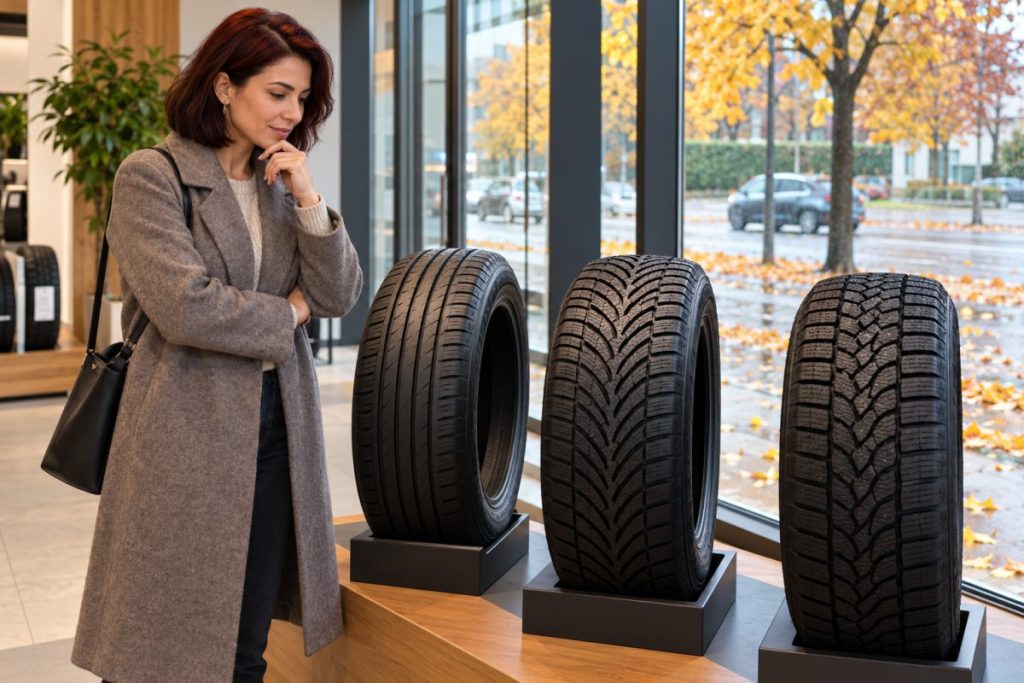
Quick answer: Summer, winter and all-season tyres use different compounds and tread patterns for different conditions. Summer designs focus on warmer conditions, winter designs on cold and snowy conditions, and all-season tyres combine aspects of both. The all-season name does not guarantee identical performance on every surface, vehicle or journey.
More than tread appearance
Michelin compares both compounds and tread design. Continental describes all-season tyres as a combined approach that may suit milder winter conditions. Read the exact manufacturer model description and vehicle requirements rather than classifying a tyre from a photograph.
Summer tyres focus on warmer dry and wet-road use; ask whether your winter routes involve cold, snow or ice. Winter tyres address cold, snow and ice; consider your warmer-month plan. For all-season tyres, ask about the exact model’s limits in your climate and on your routes.
This comparison is not a product ranking or personal purchase recommendation. Models within each category differ. Approved sizes, load/speed requirements and vehicle-manufacturer approvals still need verification.
Think about destinations as well as home
Neighbourhood weather may not describe an early-morning high-level route, a weekend trip into another climate or changeable road conditions. Write down your three common journey types, such as commuting, out-of-town visits and holiday travel.
Two drivers in the same city can have different needs: one mostly uses low-level urban roads while another regularly crosses a cold mountain pass. This does not select a tyre for either; it shows why a city name alone is insufficient.
Five questions before seeking advice
Which routes do you use throughout the year and how often? Can you postpone travel in snow or ice? What does the handbook require for seasonal tyres and approved sizes? If using two sets, is suitable storage and changeover arranged? How does the manufacturer explain the exact tyre model’s conditions and limits?
These answers move the discussion towards suitability for your use. Sales rankings, ratings and a brand name cannot replace that information. Do not assume all products from one brand share the same compound or seasonal suitability.
Keep technical advice and legal requirements separate
Weather-related manufacturer advice does not establish which vehicles must use particular tyres on particular dates. Check current official requirements for your country, route, vehicle use and local decisions. This comparison does not define Türkiye’s winter-tyre rules or those of another country.
Do not treat one temperature as a magic threshold. Daily changes, surfaces and travel plans matter together. No tyre name makes unsuitable conditions safe: consider postponement or another mode of transport.
Continue checks after selection
Seasonal suitability does not replace pressure and condition checks. Keep tyre-size, date-code and changeover records for the next workshop discussion.
Sources
Source review in the original Turkish guide: 29 October 2026. English edition: 4 November 2026. Follow your exact vehicle and equipment instructions.