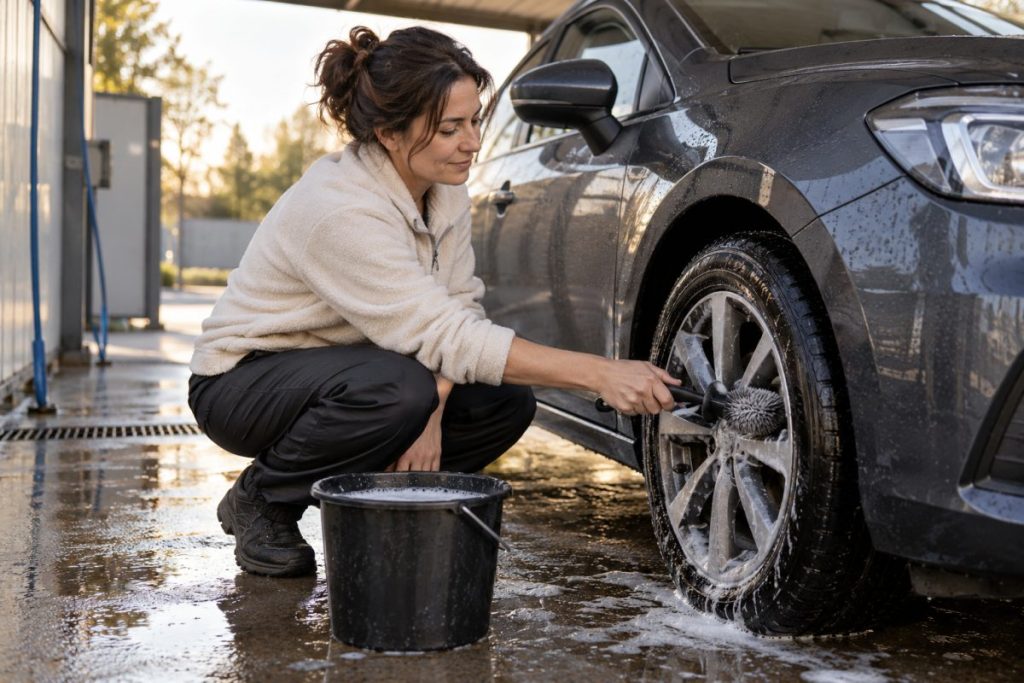
Quick answer: Stronger chemicals and harder brushes are not automatically better. Use a product suitable for the finish, cooled wheels and the manufacturer’s recommended approach. Acids, strong alkalis, solvents and abrasive products can permanently affect appearance when used without checking compatibility.
Mistake 1: treating hot wheels
Ford’s alloy-wheel care example says not to apply cleaning chemicals to warm or hot rims and covers. Arriving at a wash does not mean the surface is ready. Check the conditions safely rather than touching a dangerously hot area or spraying chemicals in a hurry.
Choose a suitable washing location, review the vehicle instructions, read the label and wait when required. A quickly edited video does not demonstrate that waiting and compatibility checks are unnecessary.
Mistake 2: assuming every finish is alike
Painted, plated and specialist finishes may require different products. Volvo also warns about strong substances and damage to finishes including chrome-plated aluminium. A wheel-cleaner label does not establish approval for your own coating.
Confirm the finish, manufacturer care requirements, product suitability, permitted gentle equipment, dwell time, rinsing and safety steps. Do not identify material solely by appearance, use one chemical everywhere or assume longer contact is better.
Mistake 3: scraping stubborn dirt harder
Ford warns that harsh chemicals with brushing can erode finishes over time and does not recommend steel wool, fuel or strong household detergents. Remaining dirt is not a reason to increase force. Return to the approved method or seek help from someone who understands the finish.
Brake dust and stuck-on dirt can obscure the underlying surface. If discolouration follows an unknown product, note that product and the sequence of work. Repeatedly adding other products makes assessment harder.
Mistake 4: mixing products
Do not mix cleaners for extra strength or improvise dilution and contact times. Keep containers labelled and follow safety instructions. Tyres, braking surfaces and wheels have different requirements: avoid indiscriminate application over the whole area.
Match the named product to the surface before starting. Do not use a product with an unreadable label or uncertain suitability. Use appropriate clean tools, follow rinsing instructions and do not hide newly noticed damage with a shiny dressing.
Clean appearance and fitness are separate
A shiny tyre is not an inspected tyre. Cuts, bulges and uneven wear need appropriate specialist assessment. Do not reflexively pull out an embedded sharp object; obtain advice.
Keep an observation record and tyre-age information. Cleaning supports care but cannot replace measurements or professional inspection.
Sources
Source review in the original Turkish guide: 29 October 2026. English edition: 4 November 2026. Follow your exact vehicle and equipment instructions.