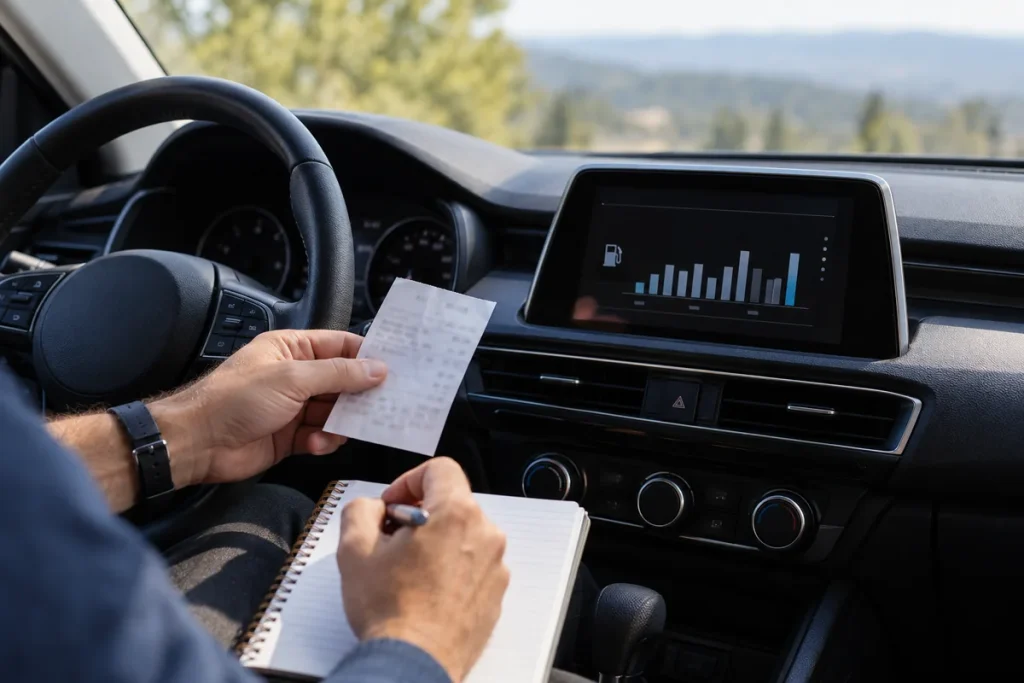
Quick answer: The dashboard and your receipt calculation may cover different periods. A display can show since-start, since-reset or since-refuelling averages, while a fill-up calculation uses fuel and distance between recorded fills. Match periods and units before judging a difference.
Identify what each number measures
The vehicle estimates from its systems and selected history. Your calculation uses the receipt quantity and odometer difference. Filling cut-off, parking angle, records, software and rounding can affect the comparison. Neither figure alone is a workshop test.
Toyota’s cited model-year example distinguishes several average displays. It illustrates why menu identity and reset conditions matter, not why every car uses the same calculation.
Match the periods
Record fill date, odometer, unit and receipt quantity. Choose the appropriate since-fill average if fitted or establish the handbook’s suitable reset arrangement at the start. At the next recorded fill, retain the display value, quantity and distance together.
Check that you are comparing average rather than instantaneous consumption. Use the same unit, such as L/100 km, throughout the comparison. A unit change can make apparently different numbers incomparable.
Use a consistent trend
Compare several fills using a consistent manufacturer-approved filling approach. Do not overfill to force a precise amount. A consistent record is more useful than trying to reproduce an exact pump cut-off.
An illustrative 7.0 dashboard average and 7.4 receipt calculation first prompt questions about the display’s period and filling records. The example does not establish a universal acceptable deviation or a fault threshold.
Consider conditions
Route mix, weather, vehicle condition, tyres and use can change consumption. EPA explains that laboratory label figures do not guarantee real-world results. Do not use a label or one dashboard number to diagnose a component.
If both records show a persistent unusual change, take dates, mileage and conditions to a qualified workshop. Ask what findings support further investigation.
Keep the record factual and distinguish a measurement difference from a diagnosed fault. The related fuel-measurement guide provides the basic receipt-and-distance calculation.
Sources
Original Turkish guide source review: 1 November 2026. English edition: 4 November 2026. Follow the current rules where you drive and the instructions for your exact vehicle and equipment.