Quick answer: Dirt, snow or ice over parking sensors can cause misleading warnings or loss of function. That does not explain every unexpected sound. Stop safely, check surroundings directly and consult your own cleaning instructions. Silence does not prove the path is clear.
Assistance is not a complete obstacle list
The Volvo V60 example describes obstruction by dirt, snow and ice. It is not permission to dismiss a particular warning. Unexpected sounds in a tight space call for stopping and reassessment rather than continuing because the sensors have sounded unnecessarily before.
Parking lines, cameras and sensors provide different information. None removes all the others’ limitations. You do not have to complete a manoeuvre if visibility is insufficient.
External observations only
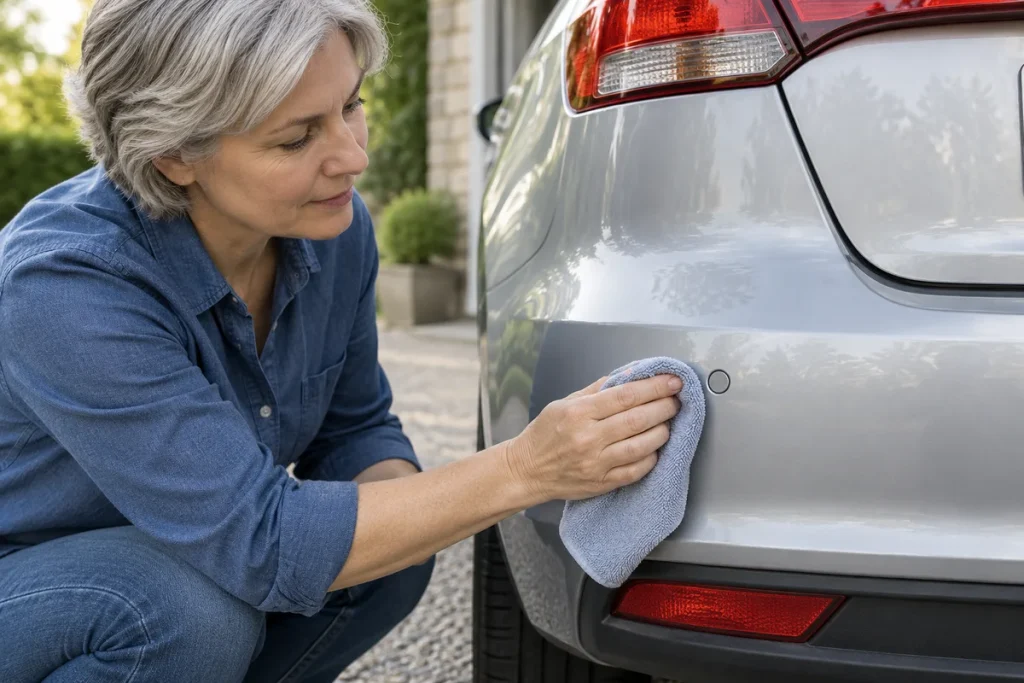
When safely parked and appropriately shut down, identify sensor positions using the matching handbook. Do not assume every round bumper part is the same sensor. Record visible dirt, obstruction or suspected damage without removing parts or interfering with wiring.
The Volvo example mentions water and appropriate vehicle-cleaning products, but your own handbook governs the method. Do not scrape ice with a hard object or apply random strong chemicals. A continuing message after cleaning needs assessment rather than an assumption that dirt explains it.
A useful record
Note weather and circumstances, the visible surface, full message, handbook-compliant cleaning performed, observed result and any documented recent bumper work. Rain does not prove water ingress; recent work does not prove someone caused a fault. Keep observations distinct from test findings.
Do not create an obstacle to test sensors
Do not put someone behind the car or approach a wall to measure when a sound begins. This is not a calibration guide. Record normal-use observations after parking safely rather than examining a phone or screen while moving.
Different camera and sensor indications do not by themselves identify which system is faulty. Follow service messages instead of merely muting sounds. Do not undertake a risky manoeuvre relying on a system whose operation is uncertain.
Three workshop questions
What does this exact model’s message mean? Does the observed surface explain it or is more inspection needed? How will the reason for proposed work and the after-work verification be documented? Add first occurrence, repetition conditions and cleaning history; say when a location or detail is uncertain.
Sources
Original Turkish guide source review: 29 October 2026. English edition: 4 November 2026. Follow your exact vehicle and equipment instructions.