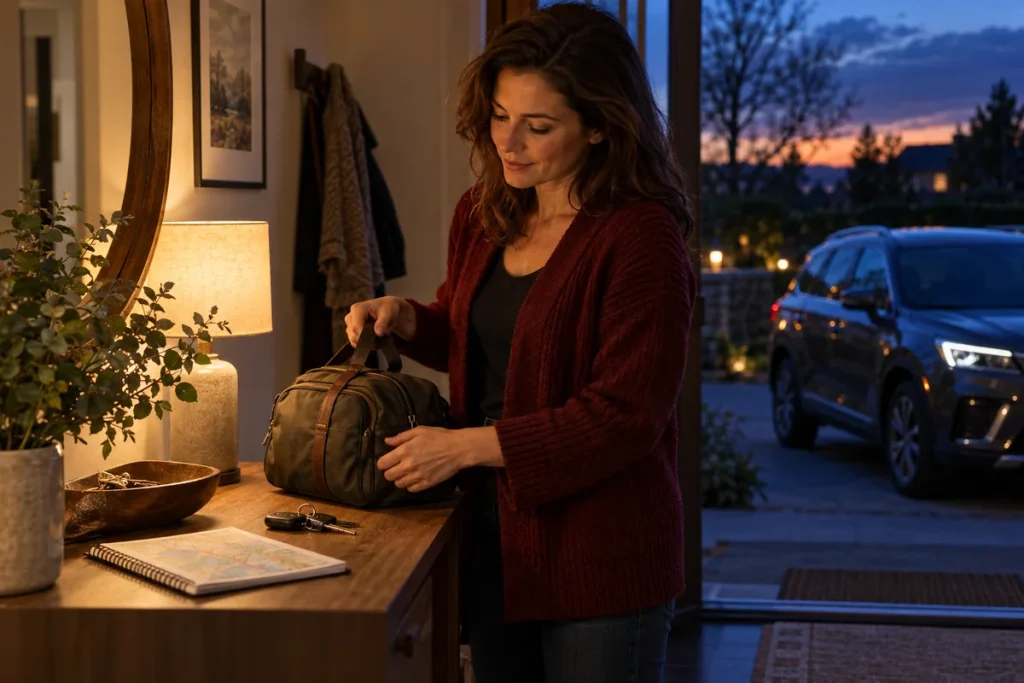
Quick answer: Assess rest first, then visibility and lighting. Clean glass, learn controls while parked and identify suitable breaks. Coffee or music does not establish that drowsiness is resolved. Another journey time or transport option can be part of preparation.
Begin with readiness
NHTSA explains that adequate sleep is the main protection against drowsy driving and coffee or energy drinks alone may be insufficient. A quiet road does not remove the need for rest after a tiring day.
Ask whether you feel sleepy, whether the return time is realistic and whether rest is possible. These questions support planning; they are not a medical diagnosis or competence test.
Complete a parked visibility check
NCDOT emphasises working lights, clean windscreens, demisting before departure and understanding any mirror night setting. Match this with your car’s instructions. US-specific practices are not automatically local rules elsewhere.
Check glass for obstructing dirt, note lighting faults, locate display-brightness controls and understand mirrors. Plan the destination entrance, parking access, an appropriate stop and a realistic return.
Observe beyond the lit patch
Reduced detail can make pedestrians and cyclists harder to notice. NCDOT highlights speed adjustment and vulnerable road users. Automatic lights and high-beam assistance retain limitations and do not replace observation.
Use a suitable stop for unfamiliar settings rather than becoming absorbed in menus while moving. A passenger explaining a control does not assume the driver’s observation responsibility.
Make a plan you can change
A planning example can include checking lights and glass before departure, identifying destination access and choosing other transport if sleepy on the return. Adapt it to your journey; it is not a reported personal experience.
Set navigation before moving and secure essentials so they need not be searched for while driving. Allow enough time for a suitable break. Do not turn completion into a performance deadline.
Distinguish vehicle and personal difficulty
Repeated night-vision problems should not be investigated through driving experiments. Seek an appropriate health assessment where needed and qualified workshop help for lighting faults. This guide does not diagnose vision, explain headlamp adjustment or determine individual fitness to drive.
Sources
Original Turkish guide source review: 29 October 2026. English edition: 4 November 2026. Follow the current rules where you drive and the instructions for your exact vehicle and equipment.