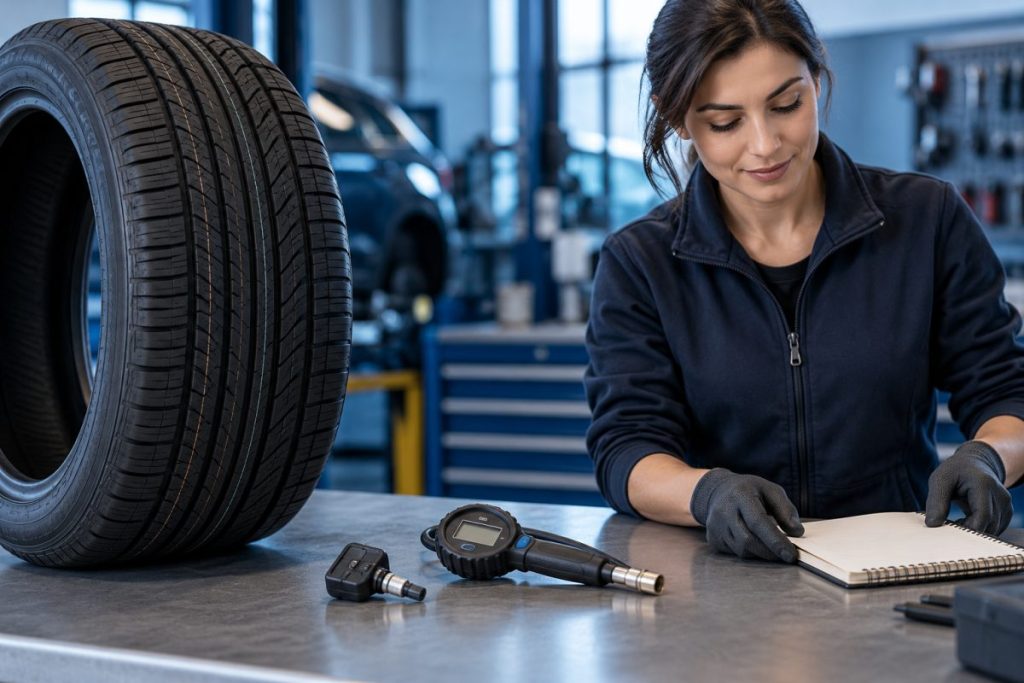
Quick answer: TPMS helps alert drivers to tyre-pressure problems. Direct systems use tyre-mounted sensors; indirect systems use information such as wheel-rotation data. A reset or new reference does not inflate a tyre, repair a puncture or automatically resolve a faulty sensor.
Two monitoring approaches
Michelin describes direct systems transmitting pressure data from sensors in the tyre or valve area, while indirect systems assess pressure loss through information such as wheel speeds. Not seeing an individual pressure number for each tyre does not prove no system is fitted. Identify the type in your model’s handbook.
Pressure measurement establishes pressure in the measured conditions; it does not inspect all damage. Correct inflation sets the appropriate manufacturer value but does not repair leaks. Reference storage establishes the required monitoring starting point but does not replace measurement. Investigating a warning means looking for its cause rather than simply extinguishing the light.
Measure first and follow your model’s procedure
Volvo’s reference-storage example requires correct inflation before a new reference is defined. Pressing a button cannot verify physical tyre condition. Menu paths and learning requirements differ: do not copy another model’s procedure.
Storing a reference just to clear a warning without checking pressures risks establishing an unsuitable starting condition. A handbook reset procedure does not mean every warning is solved that way. Repeated warnings need assessment of pressures, possible leaks and system issues.
What to record
While safely stationary, record the full message, whether it is continuous or intermittent and any other warnings. Add reliable measurements for all four tyres with their conditions, recent tyre/pressure/wheel work, and any obvious loss, damage or changed driving behaviour.
This record is not permission to continue driving. If a tyre appears low or damaged, or handling changes, do not delay while searching menus. Follow vehicle guidance on getting to safety and requesting assistance. Do not use a phone to read or photograph warnings while driving.
Similar warnings can require different questions
In one case a specialist may have set pressures correctly while the model’s reference procedure remains unfinished. In another the same tyre may be losing pressure again. The first concerns calibration; the second calls for investigating the loss instead of repeatedly resetting. These are examples, not diagnoses.
“The light went out last week” is less useful than recording when measurements were taken, the conditions, what was done and when the warning returned.
Monitoring does not end maintenance
Continue routine pressure checks. No warning is not a guarantee of overall tyre fitness. Use the pressure guide and dashboard-warning guide to organise the relevant observations.
Sources
Source review in the original Turkish guide: 29 October 2026. English edition: 4 November 2026. Follow your exact vehicle and equipment instructions.