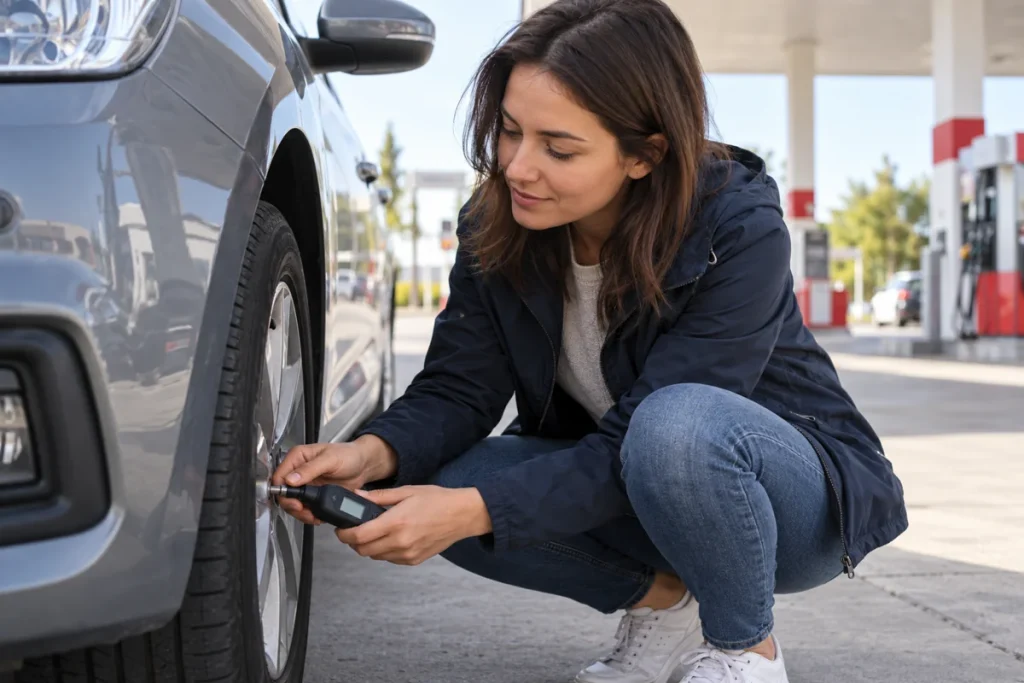
The short answer: use the pressure specified by your vehicle manufacturer. Front and rear tyres, vehicle load and tyre size can require different values even on the same car. Another driver’s pressure is not a reference for your vehicle.
Where to find the correct number
Start with the label around the driver’s door and the owner’s manual. Some vehicles also show pressure information inside the fuel flap. The label may have separate rows for tyre size, normal load and full load. Match the row to your tyres and the load for your journey. If you are unsure, photograph the label while parked and ask the manufacturer’s service team.
The tyre sidewall tells you something different
The maximum pressure printed on a tyre’s sidewall is not the same as the vehicle manufacturer’s recommended everyday pressure. Use the vehicle label or manual as your reference.
A short sequence for the air pump
- Read the label first. Note the front and rear values, unit and load condition while the vehicle is parked.
- Check cold tyres. Driving heats tyres and raises pressure. Plan the check before a long drive where possible and follow the manual’s measurement conditions.
- Check the pump’s unit. Bar and PSI are different scales. The unit on the pump must match your reference.
- Check every tyre. Compare the reading with the specified value, adjust if needed and refit the valve cap. If you have a spare tyre, check its separate requirements in the manual.
Converting bar and PSI
One bar is approximately 14.5 PSI. For example, 2.2 bar is approximately 31.9 PSI. This is a conversion example, not a recommendation to use 2.2 bar for every car. Selecting the right unit matters more than remembering a general number.
What your observation may mean
- One tyre repeatedly loses pressure: note the dates and readings, then have a tyre professional check for a puncture, valve or wheel issue.
- A reading is higher after a long drive: do not release air solely because a warm reading is high. Recheck cold tyres under the manufacturer’s stated conditions.
- The TPMS light comes on: stop somewhere safe and assess the tyres. Check actual pressures and the manual before resetting the warning.
- The label has several rows: match tyre size, front/rear axle and load. Do not choose a row from a generic online table.
Keep a small check record
Record the date, whether the tyres were cold, the front and rear readings, and any adjustment. A repeated drop in one tyre gives a workshop clearer information. Regular checks and checks before a long journey are more useful than waiting for a warning light.
Frequently asked questions
Should all four tyres have the same pressure?
Not always. The vehicle label may specify different values for front and rear tyres. Follow the relevant load row.
Will the light go out immediately after inflation?
TPMS learning and reset procedures vary by model. Once the correct pressure is confirmed, follow the manual. Resetting a light does not resolve the cause of pressure loss.
Sources and scope
This guide supports general vehicle literacy. Your own vehicle’s manual takes priority for technical values, inspection conditions and procedures. English edition: 3 November 2026. The Turkish source was last editorially checked on 29 October 2026.
Keep learning
Keep your own maintenance notes in My Garage, or ask the community a clear question. Do not include number plates, documents or contact details.