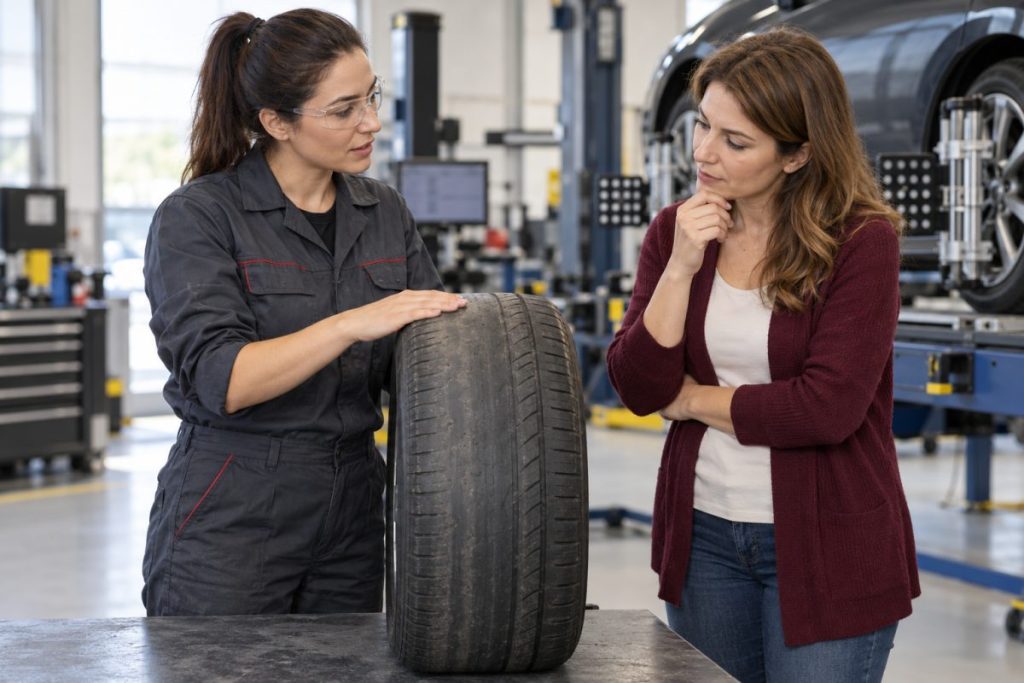
Quick answer: Record which tyre and which part look different, then arrange assessment by a qualified tyre specialist. Inflation, wheel geometry and mechanical condition can produce similar symptoms. A photograph alone cannot prove that alignment is wrong or that a particular suspension part needs replacement.
Separate observations from diagnoses
Michelin discusses shoulder, centre and one-sided wear; Continental describes centre, one-sided and saw-tooth patterns. These are clues for inspection. “The inner edge of the front-right tyre looks more worn than the outer edge” is a useful starting point. If two tyres fitted together now look different, say so without assuming someone necessarily performed an incorrect repair.
What to record
For different-looking shoulders, record position, cold-pressure history and photographs; do not conclude pressure is definitely the cause. For centre wear, compare inner, central and outer areas; do not conclude the tyre was certainly overinflated. For one-sided or patchy wear, include impact and work history; do not name a failed suspension part from appearance alone.
Use similar lighting and camera angles when comparing photographs. The record supports a workshop discussion rather than replacing measurement. Wear also depends on the vehicle, tyre and conditions of use.
A short observation form
Note the first observation date and approximate odometer, tyre position and fitting date if known, affected area, any recent kerb or pothole impact, recent tyre/pressure/alignment/suspension work, and accompanying noise, vibration or changes in behaviour.
“I hit a pothole near the front-right wheel last week and noticed a new vibration two days later” describes a sequence without proving a cause. Do not reproduce symptoms through high-speed tests or abrupt manoeuvres.
While awaiting inspection
Do not experiment with random inflation pressures to correct wear. Setting the manufacturer’s applicable pressure is a separate job and cannot restore existing damage. Moving wheels does not prove the cause is resolved; appropriate rotation depends on vehicle, tyre and manufacturer instructions.
A bulge, deep cut or separation needs assessment as possible structural damage, not just uneven wear. If continuing may be unsafe, obtain suitable roadside or tyre-specialist help rather than remote permission to carry on.
Leave with a clear record
Ask what was inspected, which measurements were taken, what work is proposed and why, and when another check is needed. Tyre assessment, geometry measurement and suspension inspection are different scopes. Old wear will not disappear after an adjustment: compare new observations with the previous record.
Sources
Source review in the original Turkish guide: 29 October 2026. English edition: 4 November 2026. Follow your exact vehicle and equipment instructions.