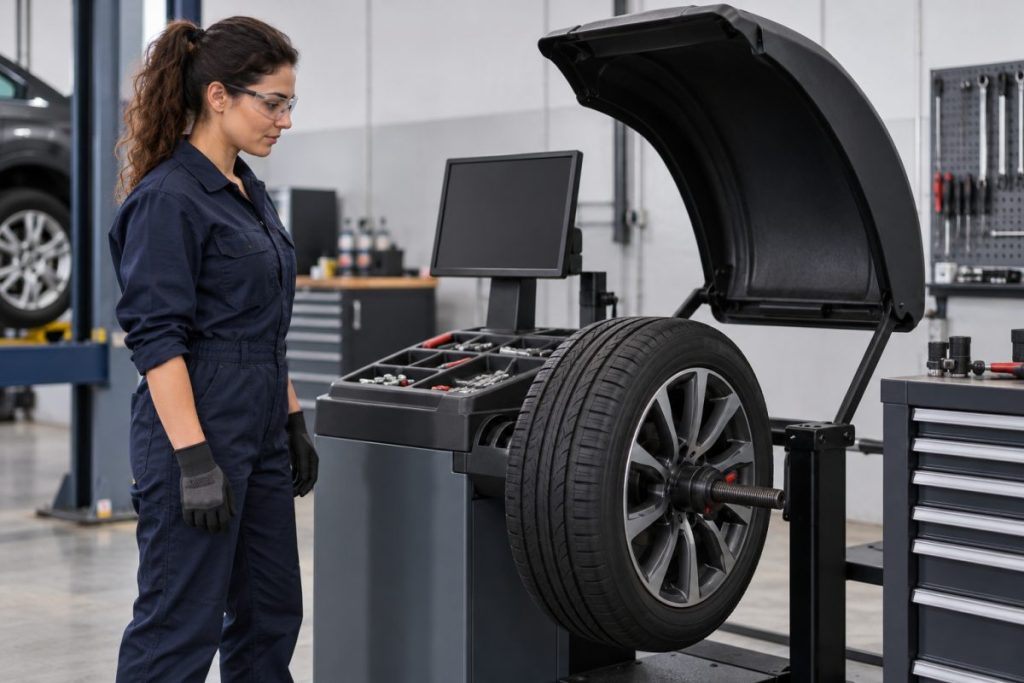
Quick answer: They are different jobs. Wheel alignment concerns wheel angles and geometry according to the vehicle manufacturer’s requirements. Balancing addresses uneven mass distribution in the rotating wheel-and-tyre assembly. One does not replace the other, and a vibration or pulling complaint does not automatically identify either as the cause. [1][2]
Which question does each job address?
| Topic | Alignment / geometry | Balancing |
|---|---|---|
| Main question | Are the wheel angles within the manufacturer’s specification? | Is mass distributed evenly around the rotating assembly? |
| Focus | Vehicle geometry and relevant adjustment points | The wheel-and-tyre assembly and the appropriate balancing procedure |
| Ask for | Measured values and the proposed correction | Which wheels were checked and what was done |
| Does not by itself fix | Every mechanical fault or vibration | Every damaged component or geometry problem |
Michelin distinguishes balancing the wheel-and-tyre assembly from the specialist work of setting alignment to the manufacturer’s angular requirements. This helps you discuss the complaint, rather than simply asking for both services as if they were one job. Adjusting wheel angles at home without the correct information and equipment is outside this guide. [1]
Record the symptom; leave diagnosis to inspection
If you notice vibration, record whether it is felt through the steering wheel, seat or wider body. Note when the behaviour changed and whether it followed new tyres or an impact. Do not make high-speed driving trials to reproduce it. Seek professional support if a new behaviour affects safety.
Continental also explains the different purposes of alignment and balancing. Typical symptoms are not a diagnosis for every vehicle. For example, apparent pulling may involve road slope, tyre condition or other factors. Describe the circumstances rather than presenting an unchecked cause as certain. [2]
Five questions for the workshop
- Which measurements or inspections will you carry out first for this complaint?
- Are you proposing alignment, balancing or a different investigation?
- Which manufacturer specifications or technical information apply to this vehicle?
- How will you explain the before-and-after results, and can I have a measurement printout if available?
- If another problem is found, will you agree the additional work with me before proceeding?
These questions help you understand what was supplied. Being told that balancing was carried out does not mean the wheel angles were also adjusted. If the invoice or work order is unclear, ask for a written explanation.
An example observation note
“The front tyres were replaced two weeks ago. On the last few journeys I noticed a steering-wheel vibration that I had not noticed before. I do not have an exact measurement of the speed at which it begins. Please assess the tyre installation, wheel condition and any necessary checks.” This describes the sequence without inventing a failed part. Do not add details that do not match your own experience.
After the visit, add the date, odometer and work performed. If the symptom continues, distinguish between work having been done and the complaint having been resolved when you give feedback. A new assessment is more useful than attaching a definite fault label remotely.
Track tyre condition separately
An adjustment cannot restore tread that is already worn away. Keep notes of damage or uneven wear, and check pressure against the vehicle manufacturer’s values. These checks complement one another.
Sources
- [1] Michelin — Wheel alignment and wheel balancing.
- [2] Continental — Wheel alignment and its difference from balancing.
Original source review: 29 October 2026. English edition: 3 November 2026. General information; not a fault diagnosis or workshop procedure.
Keep your maintenance notes in My Garage. For a general question, ask the community, or explore the guide collection.